



Bedminster and Redcliffe red route survey launches
This autumn, businesses and residents are being invited to have their say on proposals to introduce Bristol’s first red route...
Read moreExpenditure on bus travel is relatively much more important to the poor than to the rich. It was partly for this reason that local authorities such as South Yorkshire and the Great London Council used fares subsidies as a tool to ensure adequate levels of mobility to disadvantaged groups.1
The 1985 Transport Act deregulated public transport services outside London from 1986. Between 1975 and April 1986, public transport by bus in the metropolitan county of South Yorkshire, was increasingly subsidised. Trends in road traffic accident casualties between 1974 and 1983 in all the six provincial English metropolitan counties were compared in order to examine the possible effect of this unique subsidy on the incidence of road traffic accident casualties. During that period the total number of casualties in South Yorkshire did not change significantly compared to the other metropolitan counties. However, the proportion of all casualties in South Yorkshire who were bus occupants did increase relative to other metropolitan counties, indicating either an increase in the amount of bus travel or a decrease in travel by other modes.
There was a large increase in bus patronage in South Yorkshire relative to the other metropolitan counties, and the conclusion is that it is the transport policy in South Yorkshire which resulted in an actual increase in distances travelled by bus. Since bus is the safest form of road travel, it is concluded that the public transport subsidy in South Yorkshire benefited the health of the local population by providing the social amenity of additional travel at the least additional health cost. If this extra travel had been undertaken by modes other than bus, there would have been substantially more casualties than there actually were.2
After deregulation of bus services in 1986, when bus fares rose by 250% in South Yorkshire, there were major impacts on travel behaviour:
Additionally, social support networks suffered as travel to undertake informal caring roles were more difficult to make. This resulted in increases in requests for statutory support services including home help.3 Bus de-regulation is likely to have made caring responsibilities and social support more difficult, including provision of child care, involving increased complexity in individual household scheduling, a burden borne particularly by women.4 Car ownership grew faster in South Yorkshire compared to other metropolitan areas over the following decade.
1 Goodwin, P. 1990 Demographic impacts, social consequences, and the transport policy debate, Oxford Review of Economic Policy, 6(2): 76-90.
2 Nicholl, J., Freeman, M., Williams, B. 1987 Effects of subsidising bus travel on the occurrence of road traffic casualties, Journal of Epidemiology and Community Health, 41: 40-54.
3 Sheffield City Council, 1987 The bus booklet, Sheffield City Council.
4 Grieco, M. 1989 Low income families and inter-household interdependency: The implications for transport policy and planning, paper to Transport and Urban Deprivation workshop, University of Liverpool.
This autumn, businesses and residents are being invited to have their say on proposals to introduce Bristol’s first red route...
Read more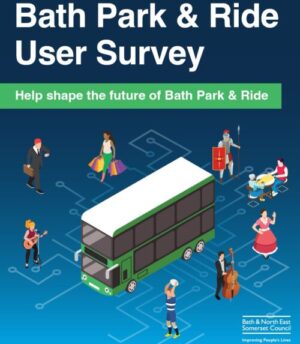
Bath & North East Somerset Council wants to hear from everyone who uses Park & Ride, whether regularly or occasionally....
Read more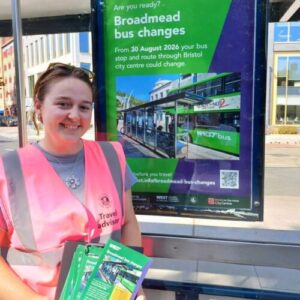
People who get on and off the bus in Broadmead will be able to get advice from a team of...
Read more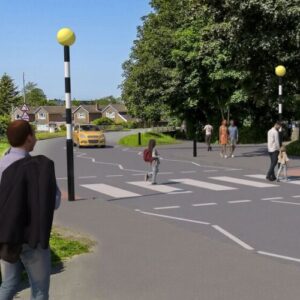
Over £4 million in funding from the West of England Mayoral Combined Authority has been confirmed to help people get...
Read more
A raft of improvements to bus services in the West of England is set to be introduced, after feedback from...
Read more