


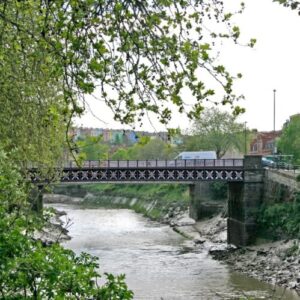
Bedminster and Redcliffe red route survey launches
This autumn, businesses and residents are being invited to have their say on proposals to introduce Bristol’s first red route...
Read moreThe hypothesis of ‘safety in numbers’ has been stated a number of times over recent decades. Indeed, Prof Ruben Smeed applied the idea of safety in numbers in 1949 to the number of motor vehicles in a country, drawing a conclusion that the more motor vehicles the lower the risk per vehicle occupant. ‘
Safety in numbers as applied to walking and or cycling has been discussed for at least 30 years. For example, in 1978, Mike Hudson wrote
“the fact that cyclists ‘rights are more respected in towns where cycling is prevalent suggests that an increase in the number of cyclists on all roads would condition car drivers to expect and allow for them”.1
More recently, Jacobsen provided evidence for the hypothesis arising from analysis of national data from 14 European countries on walking and cycling as well as data for 47 towns in Denmark, and 68 towns in California. 2 Analysis of all data sets provided evidence arising from which the author concluded that:
Jacobsen’s paper is particularly important both because of his conclusions and also because it highlights the paucity of attention to this potentially substantial contribution to the achievement of key road transport policy objectives.
Safety in numbers is taken as a de facto in other European countries where risk per unit of exposure is lower with higher levels of walking and cycling.
A paper copy of this week’s paper will be on my desk for those wanting more detail.
1 Mike Hudson, 1978 The Bicycle Planning Book, London: Open Books/Friends of the Earth.
2 Jacobsen, P. 2003 Safety in numbers: more walkers and bicyclists, safer walking and bicycling, Injury Prevention, 9: 205-209.
1: Safety in Numbers Download pdf PDF approximately 52.71 K
This autumn, businesses and residents are being invited to have their say on proposals to introduce Bristol’s first red route...
Read more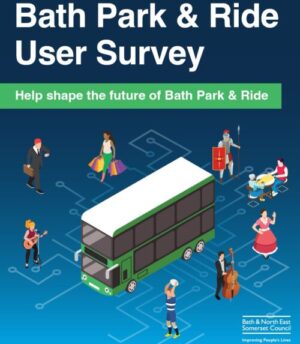
Bath & North East Somerset Council wants to hear from everyone who uses Park & Ride, whether regularly or occasionally....
Read more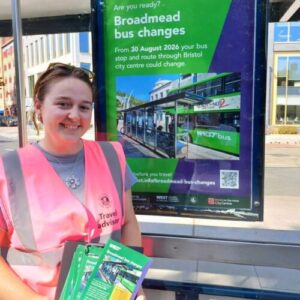
People who get on and off the bus in Broadmead will be able to get advice from a team of...
Read more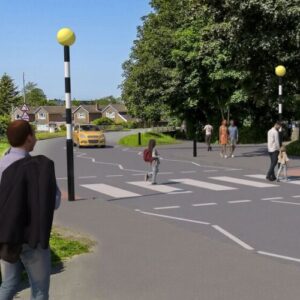
Over £4 million in funding from the West of England Mayoral Combined Authority has been confirmed to help people get...
Read more
A raft of improvements to bus services in the West of England is set to be introduced, after feedback from...
Read more