

Electric Vehicle Charge Point Survey
The Department for Transport’s Local Electric Vehicle Infrastructure (LEVI) fund supports local authorities in England to provide electric vehicle charge points for residents without off-street parking. The West of England Mayoral Combined Authority has secured £6.6 million from the LEVI fund to help create a charge point network throughout Bath and North East Somerset and North Somerset. To maximise our funding, we are partnering with North Somerset Council to enhance our procurement of a charge point operator and the delivery of charge points.
Electric Vehicle Charge Point Survey
Expanding and connecting charge point coverage makes it simpler for more people to choose electric vehicles—reducing emissions, cutting fossil fuel dependency, and enhancing air quality.
Last year we asked communities to suggest locations for electric vehicle chargers both on-street and in our local car parks. We have used this to identify initial areas where demand is high. Now we would like to continue to get your views on on-street electric vehicle charge points and how this may impact you.
Responses to the survey will be used to understand public opinion on electric vehicle charging and help to inform site selection with a successful charge point operator.
Complete the SurveyAreas of Interest
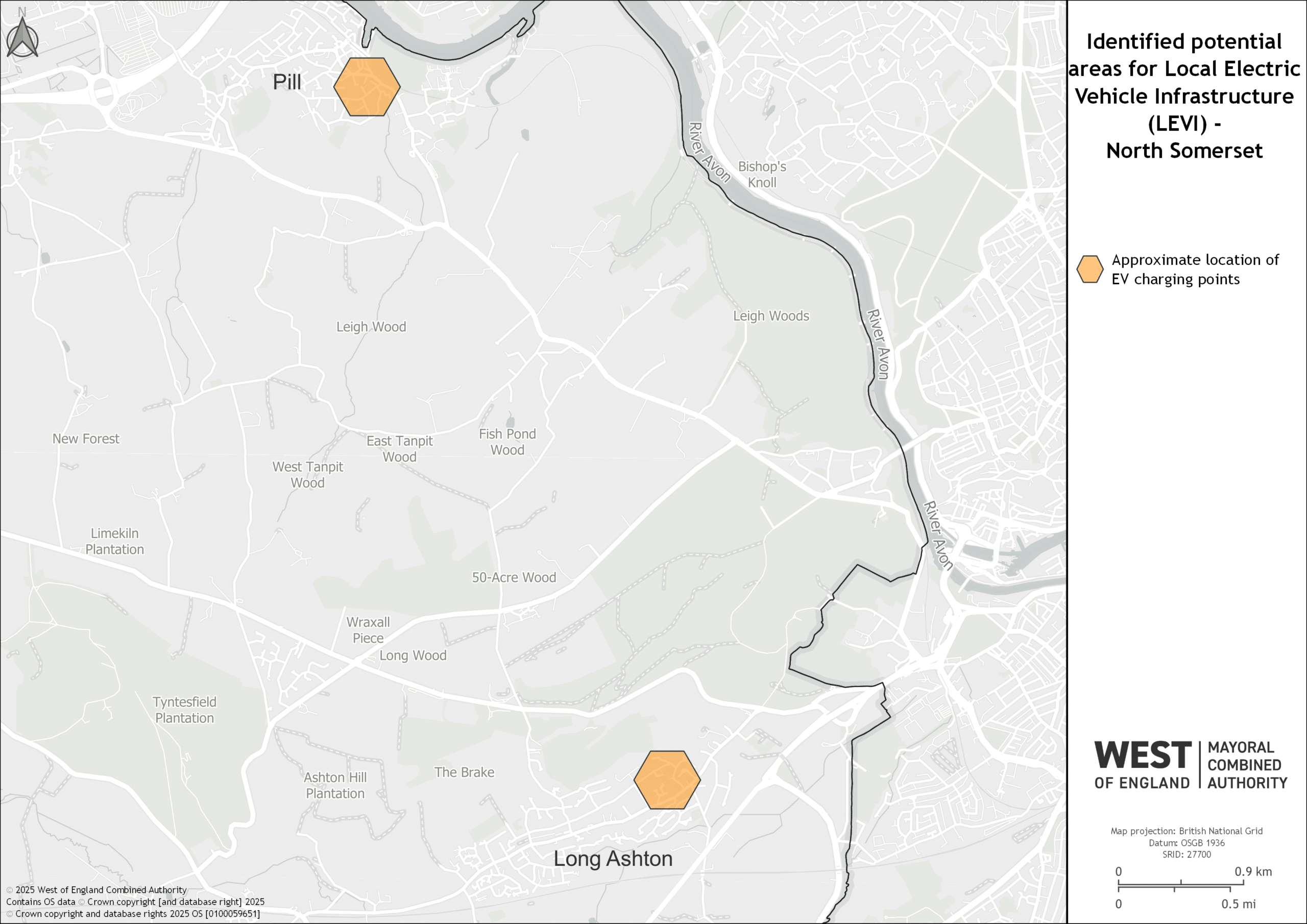
Our maps show areas of interest for new charge point installations in Bath & North East Somerset and North Somerset. These locations have been identified based on previous public engagement, where people shared where they would like to see charge points. To view the areas we’re currently considering, please click the image related to your area – this will open in a new window. Please note that exact locations are not listed, as these are not yet defined. We’d like to hear your views on these area suggestions and welcome any additional site recommendations.
*Bristol City Council are currently reviewing locations suggested during their engagement and further information will follow.
Bath and North East Somerset
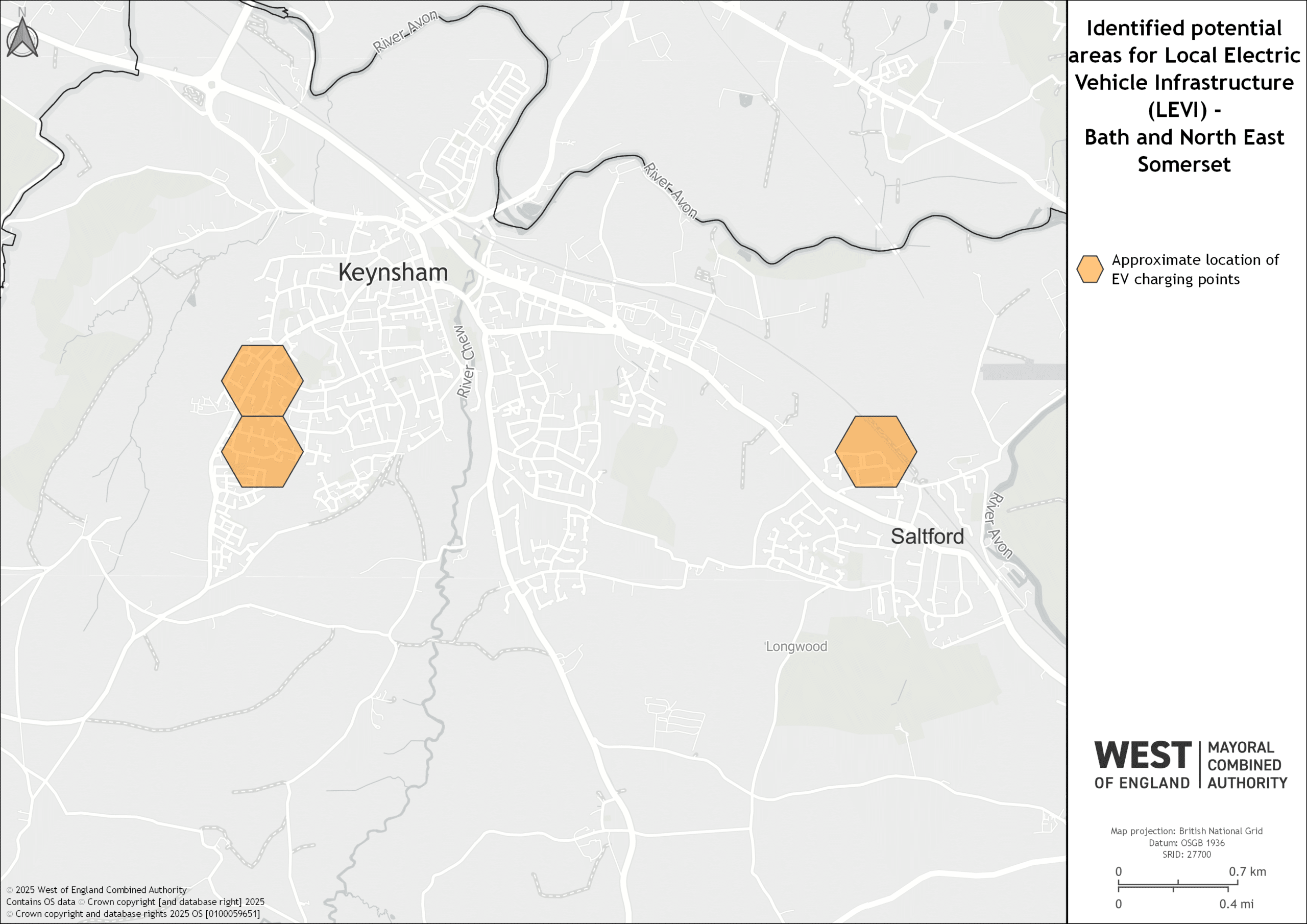
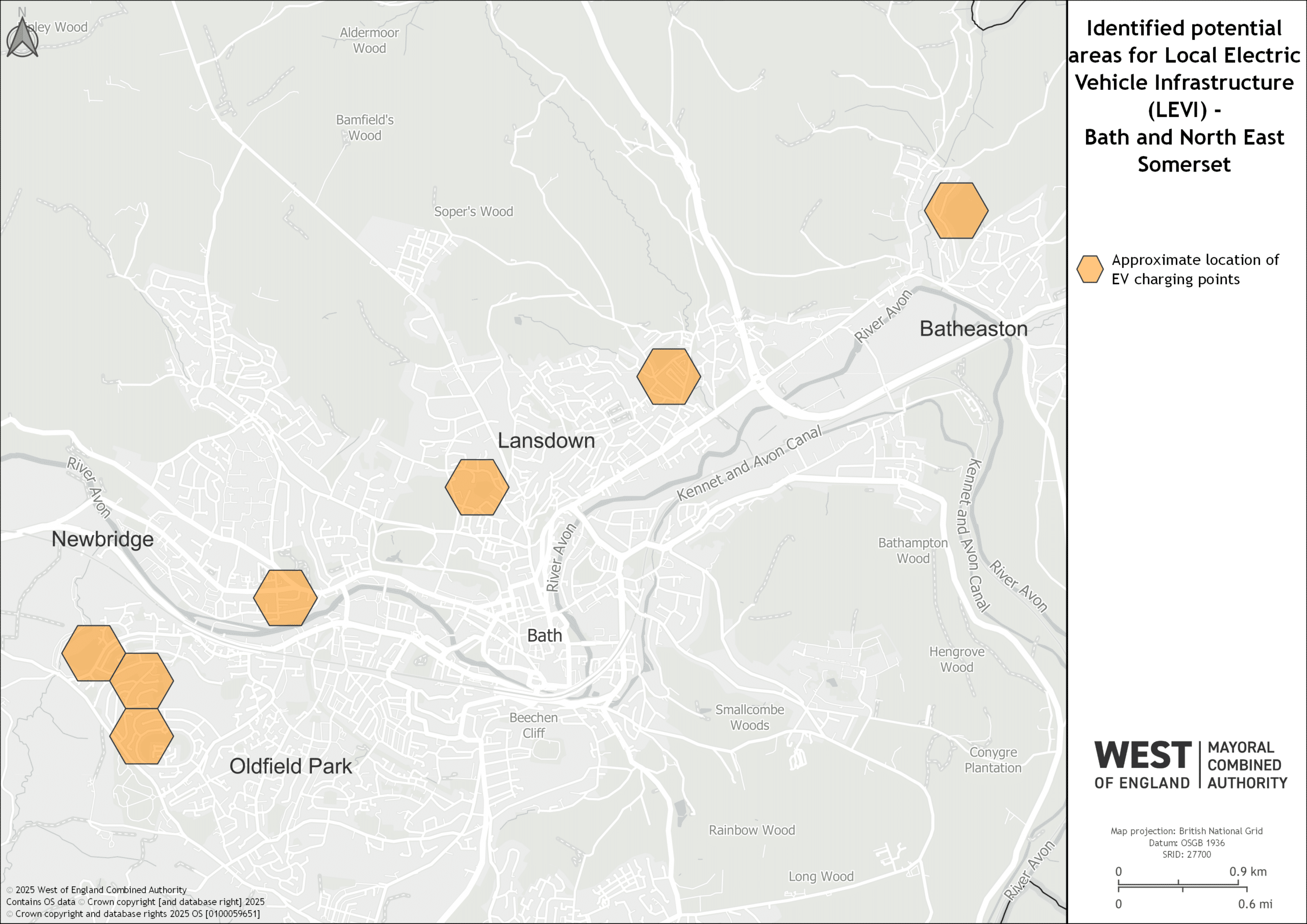

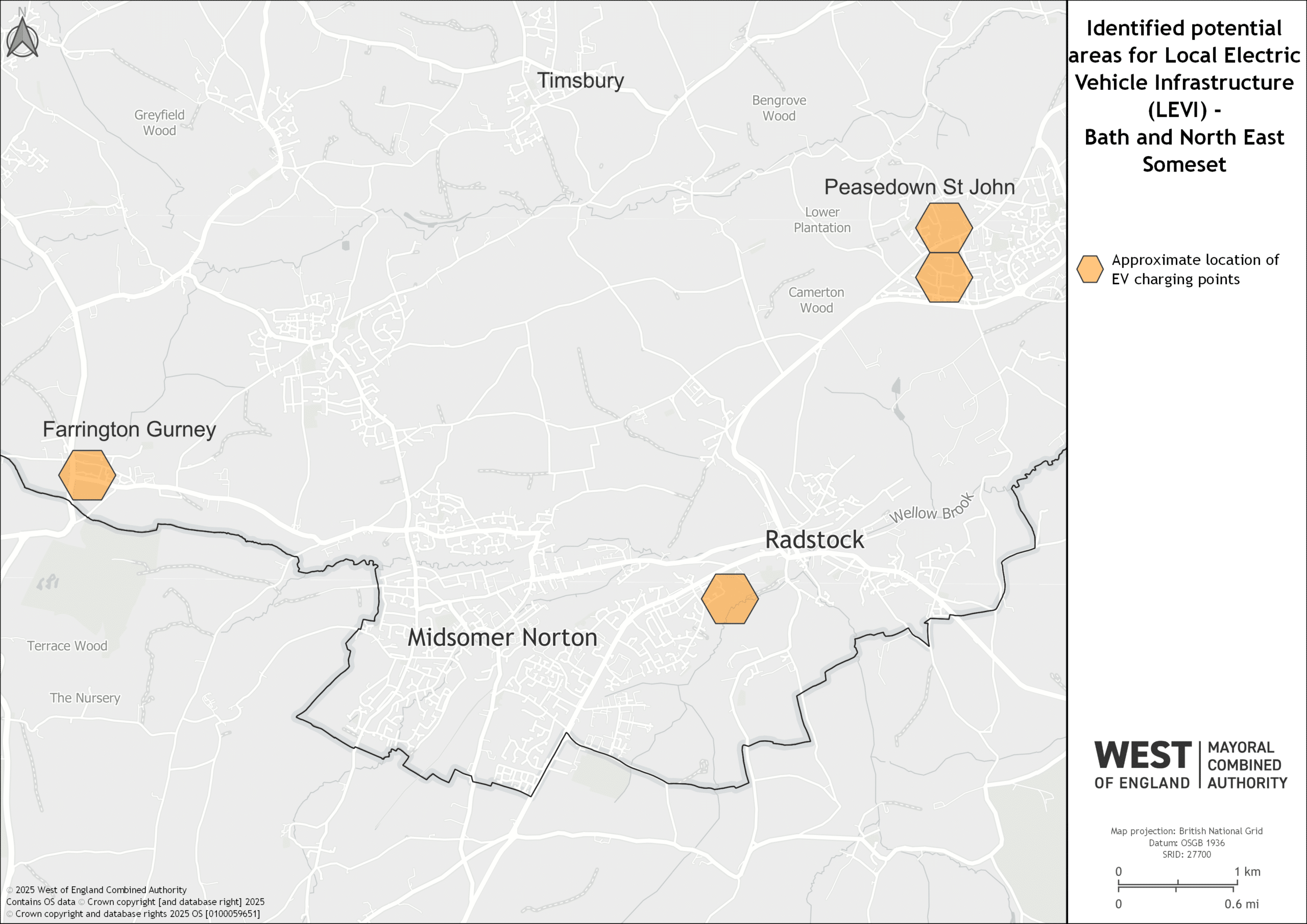
North Somerset
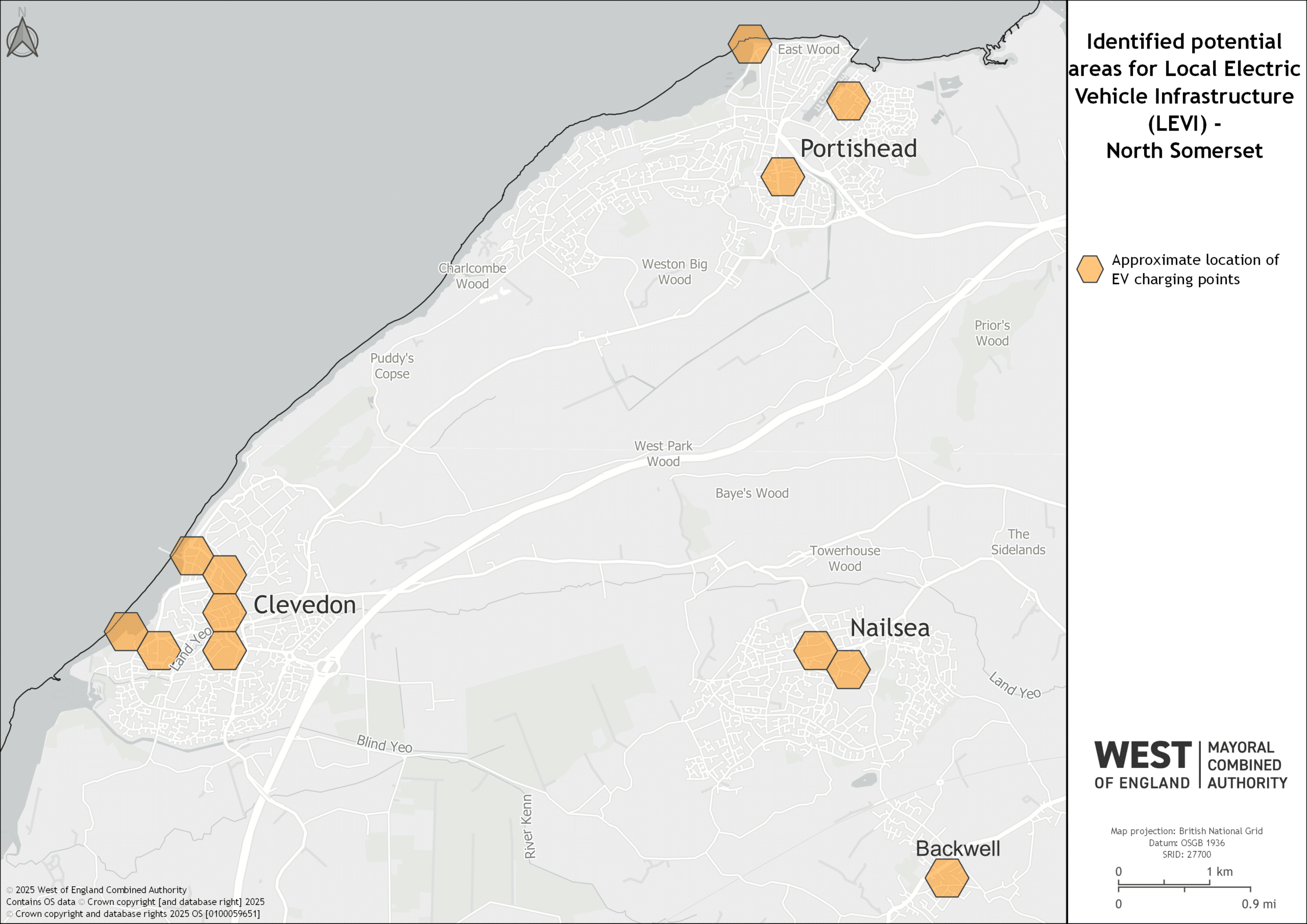
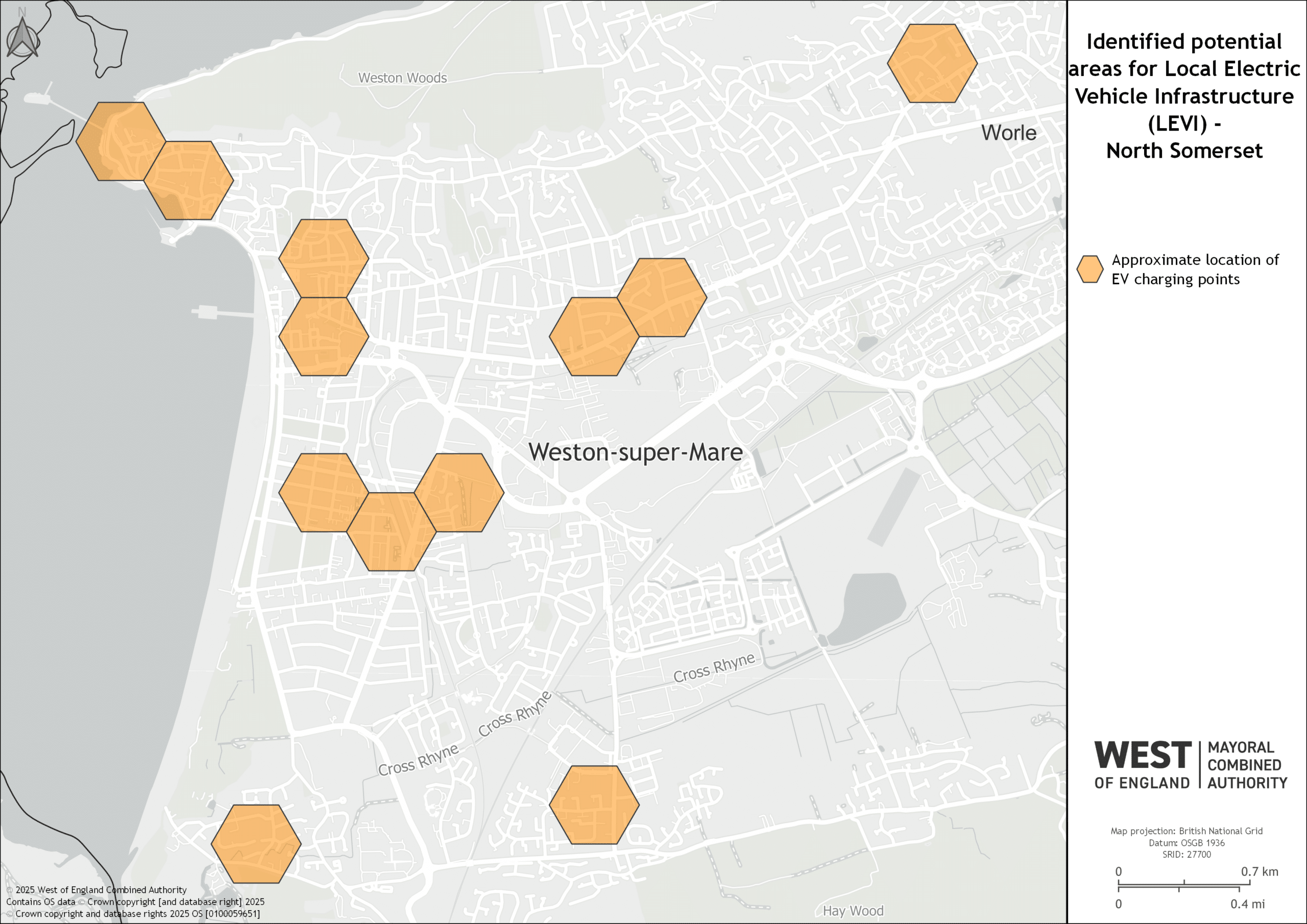
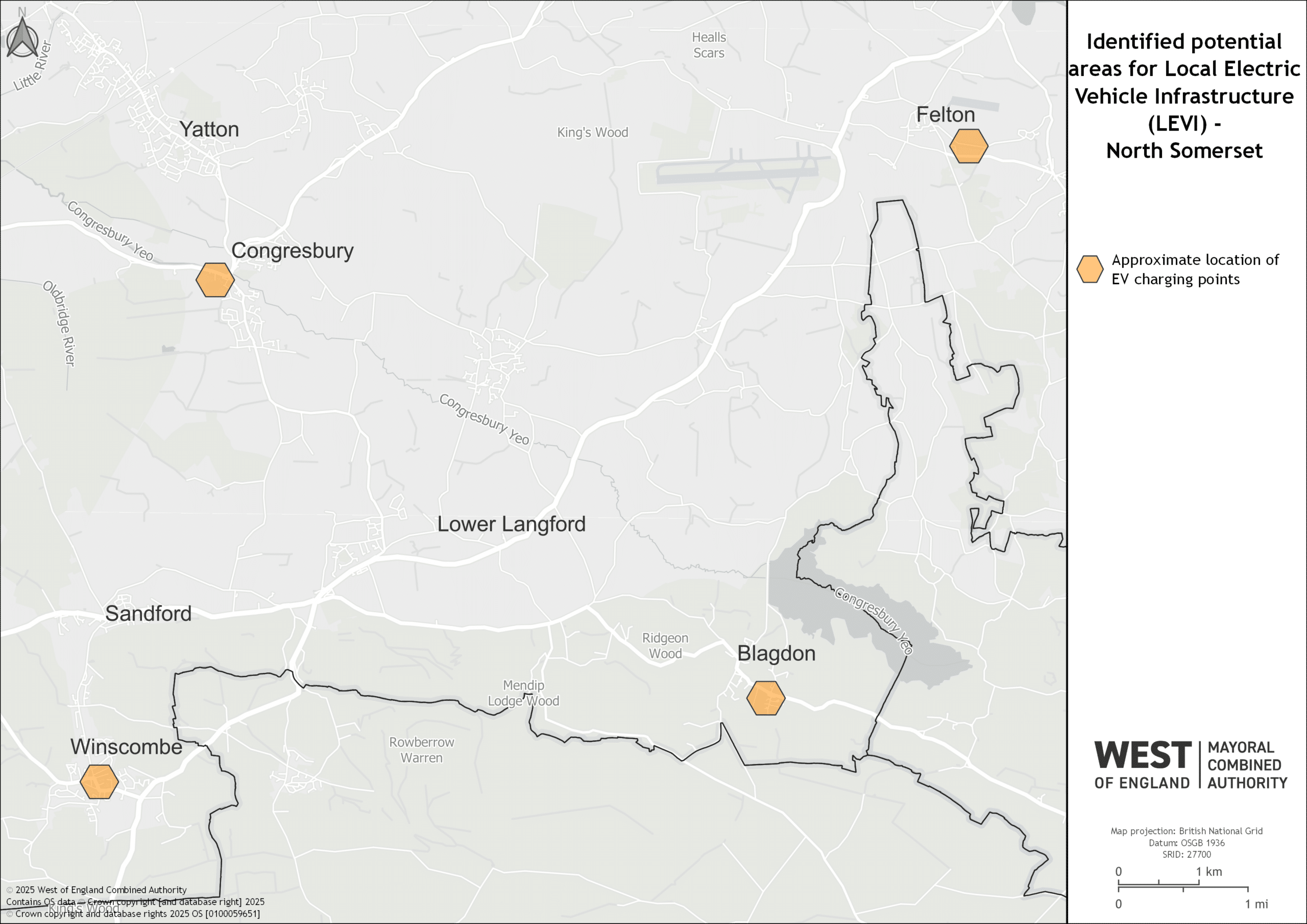
Suggest a charge point location
Using the interactive map, you can drop pins at locations that you feel would benefit from having an electric vehicle charge point. Whether it’s outside your home or workplace, shops, or near a local park, every suggestion will help build a more comprehensive picture of what’s needed locally.
Click the button below to access the interactive map and start dropping pins!
Top 10 Myths About Electric Vehicles (EVs) – Busted!
-
We’re not proposing to change any of the parking arrangements at the moment, so other cars will still be able to park as before, although we hope people will be considerate and allow EV drivers to charge. Any future change to parking restrictions would go through the normal consultation process.
-
- New EVs used to cost a lot more than petrol or diesel cars, but prices are coming down fast. By 2026, new EVs should cost about the same. (Source)
- Used EVs are already cheaper than used petrol cars. In fact, in 2024, more used EVs were sold than used petrol cars! (Source)
- Running costs are often lower too. EVs are generally cheaper to fuel (especially if you charge at home) and need less maintenance. (Source)
-
- Most new EVs can go about 290 miles on a full charge. That’s more than enough for two weeks of average driving in the UK. Some models can now do over 400 miles (Source; Source)
- Even used EVs can go 100–250 miles, depending on the model and battery.
- Think about how far you really drive each week. On average, people in England drive about 127 miles (Source).
-
- There are different types of chargers, but here’s the simple version:
- Home chargers are usually 7kW – perfect for overnight charging and waking up with a full charge.
- Public chargers range from slow chargers, that you might find in on-street on in car parks, to ultra-fast chargers which you’ll see next to main roads or motorways. The faster the charger, the quicker your car charges.
- There are over 80,000 public chargers available nationwide, with more being installed every month (Source).
- Most EVs use Type 2 plugs for home and slow charging, and CCS plugs for faster charging at high power chargers.
- Charging cables lock in place while charging, so they’re secure.
- There are different types of chargers, but here’s the simple version:
-
- At the moment, making an EV does create more emissions than a petrol car, mostly because of the battery. New rules in the EU due in 2025 work to improve the situation with battery impacts (Source).
- But once you start driving, EVs quickly become much cleaner. Over their lifetime, they produce up to 77% less CO₂ (Source).
- After about 14,000 miles, an EV becomes better for the planet than a petrol car (Source).
- Tyre and brake wear is no higher than petrol or diesel vehicles (Source).
-
- EVs have fewer moving parts, so there’s less that can go wrong.
- They’re actually less likely to break down than petrol cars (Source; Source).
- Running out of charge is rare – and getting rarer (Source).
- If you do breakdown, there are now ways to lift EVs rather than tow them so that no damage is done (Source).
-
- EVs are less likely to catch fire than petrol cars.
- The chance of an EV battery fire is very low – about 0.0012% (Source).
-
- EVs are smooth, quiet, and quick to accelerate.
- Many have “one-pedal driving”, which many drivers report makes driving easier.
- The best way to understand it? Take one for a test drive!
-
- Yes, more EVs mean more electricity use – but energy companies are ready.
- Many EVs and chargers can charge overnight when demand is low.
- Some can even send power back to the grid when needed, this is called vehicle-to-grid charging.
-
- EVs are heavier than older cars, but not enough to damage roads or car parks.
- Most road damage comes from buses and lorries, not cars (Source).


